ONE PLACE TO UPDATE THE NETWORK, AND A MAP DRIVERS CAN ACT ON.
Platforms


Work > CSC Fuels
CSC Fuels supply fuel cards across the UK and Ireland through a network of stations their customers plan journeys around. They already had a mobile app when they came to us.
The app opened and displayed information. What it displayed had stopped being true. Station information had drifted out of date, and correcting it meant working through a process awkward enough that it kept getting postponed, which meant the information kept drifting further.
At the same time the company had just built a new website carrying the current, correct picture of the network. The accurate version of the information existed. It just wasn't the version customers had in their pocket.
THE PROBLEM
An out-of-date app is worse than no app at all, because people act on it.
-

Mobile App
The app had no reliable route to current data. Station details had to be maintained in the app separately from everywhere else they existed, which meant every change to the network was a job someone had to remember to do twice.
-

Maintenance
Maintenance being difficult is the same as maintenance not happening. When keeping a system accurate depends on someone completing an awkward manual task every time something changes, the system becomes inaccurate. Not through negligence, through arithmetic.
-

Data Integration
The new website was already the authoritative source. Re-keying it into the app by hand would have rebuilt the exact problem CSC Fuels were trying to leave behind, just with a newer interface on top of it.
-

Frictionless Access
The people using it are usually in a vehicle. Someone looking for the nearest CSC site is doing it one-handed, in a cab or a car, deciding within the next few minutes. Anything that asks them to create an account or recall a password gets closed rather than completed.
-

Route Aware
"Nearby" and "on the way" are two different questions. Finding the closest station to where you are standing and finding every station along a route to somewhere else are different problems, and an app that only answers the first one is only half useful to anyone driving for a living.
WHAT WE BUILT
What CSC Fuels needed wasn't a new app. They needed the app to stop being a second, decaying copy of information that already lived somewhere else that is more up to date.
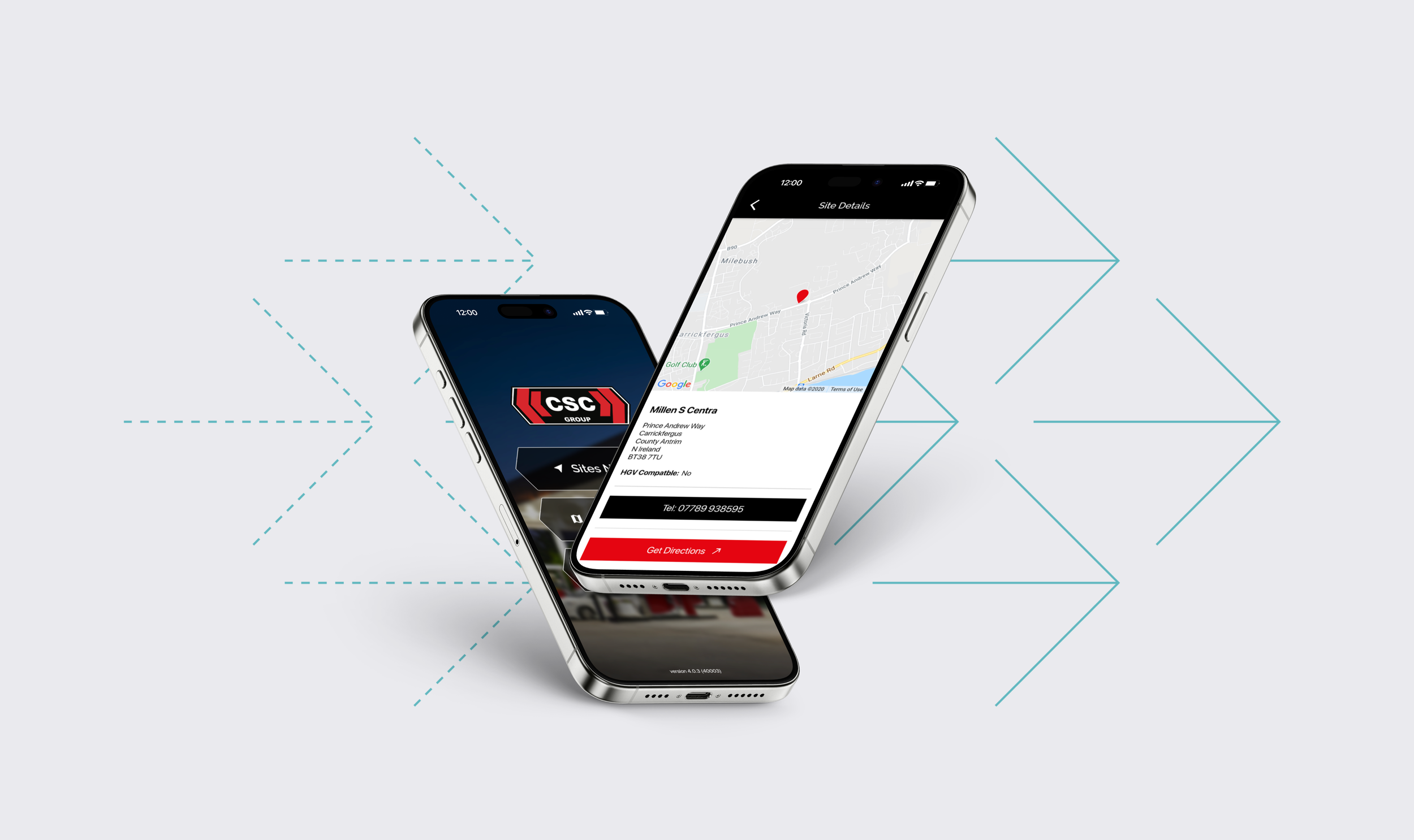
A cross-platform iOS and Android app built in Ionic, fed directly from the company's own website.
-
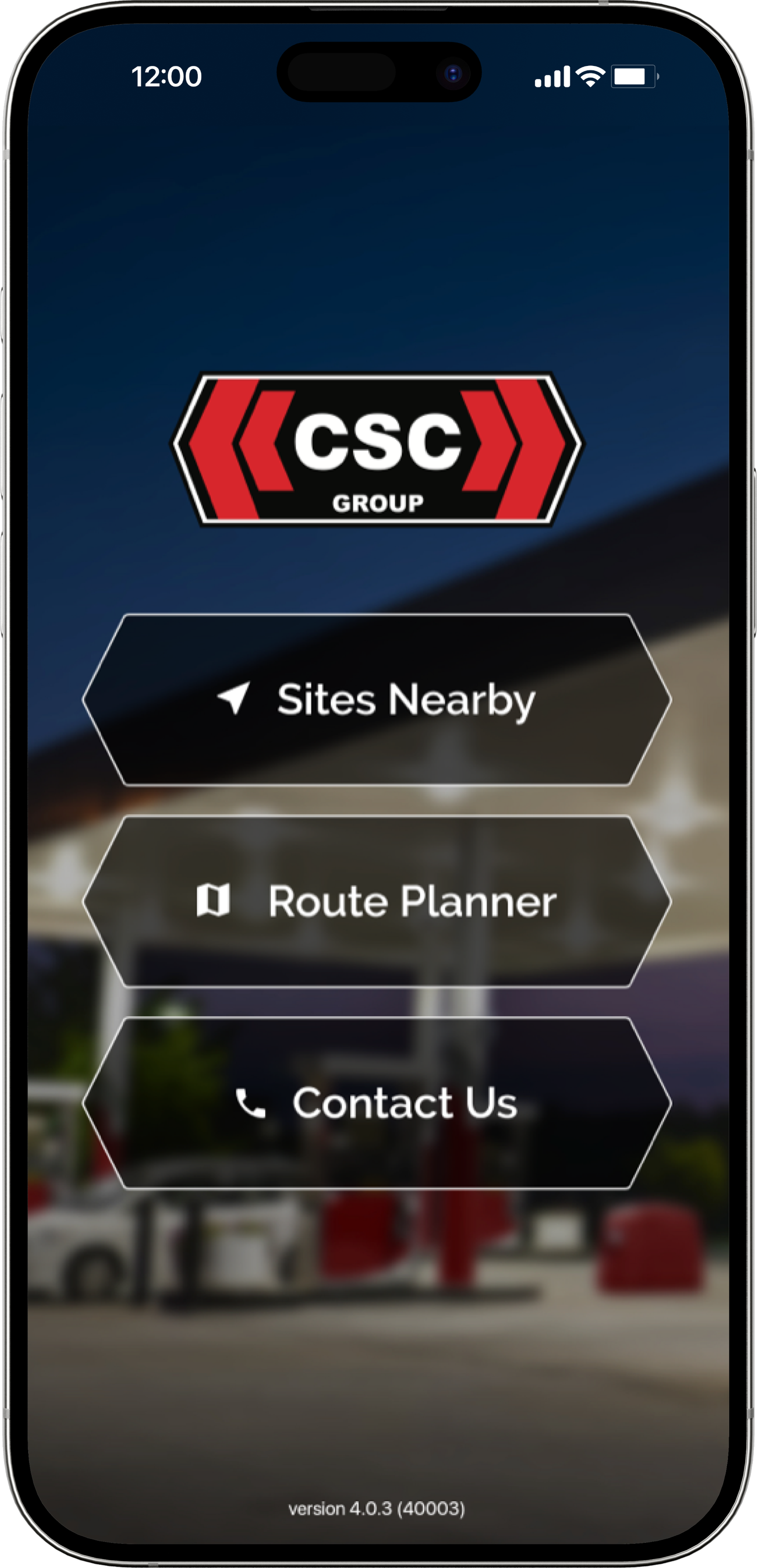
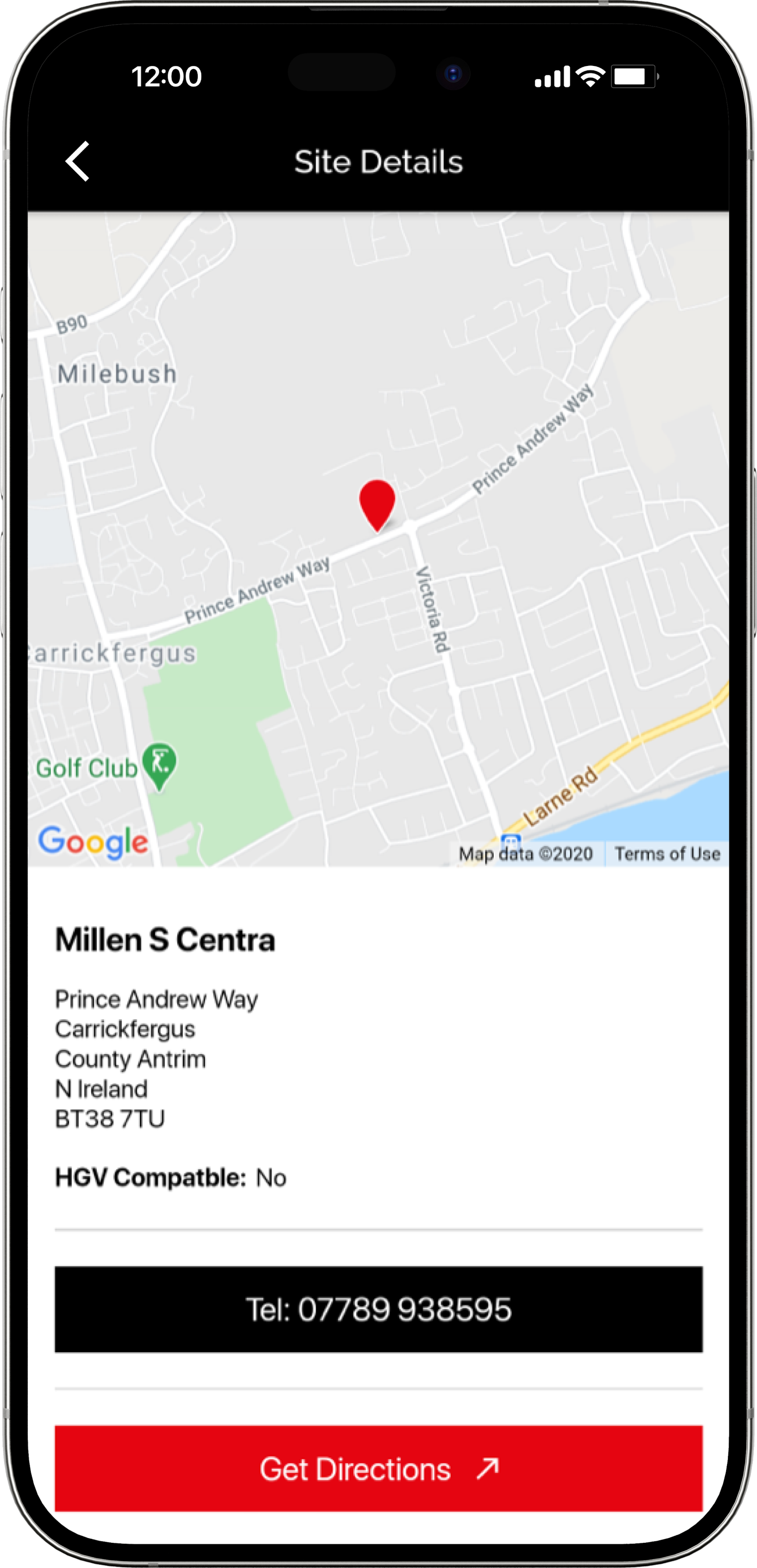
01. Sites Nearby.
Stations near the user's current location, with search and map zoom, so a driver can see what's around them without typing anything.
-
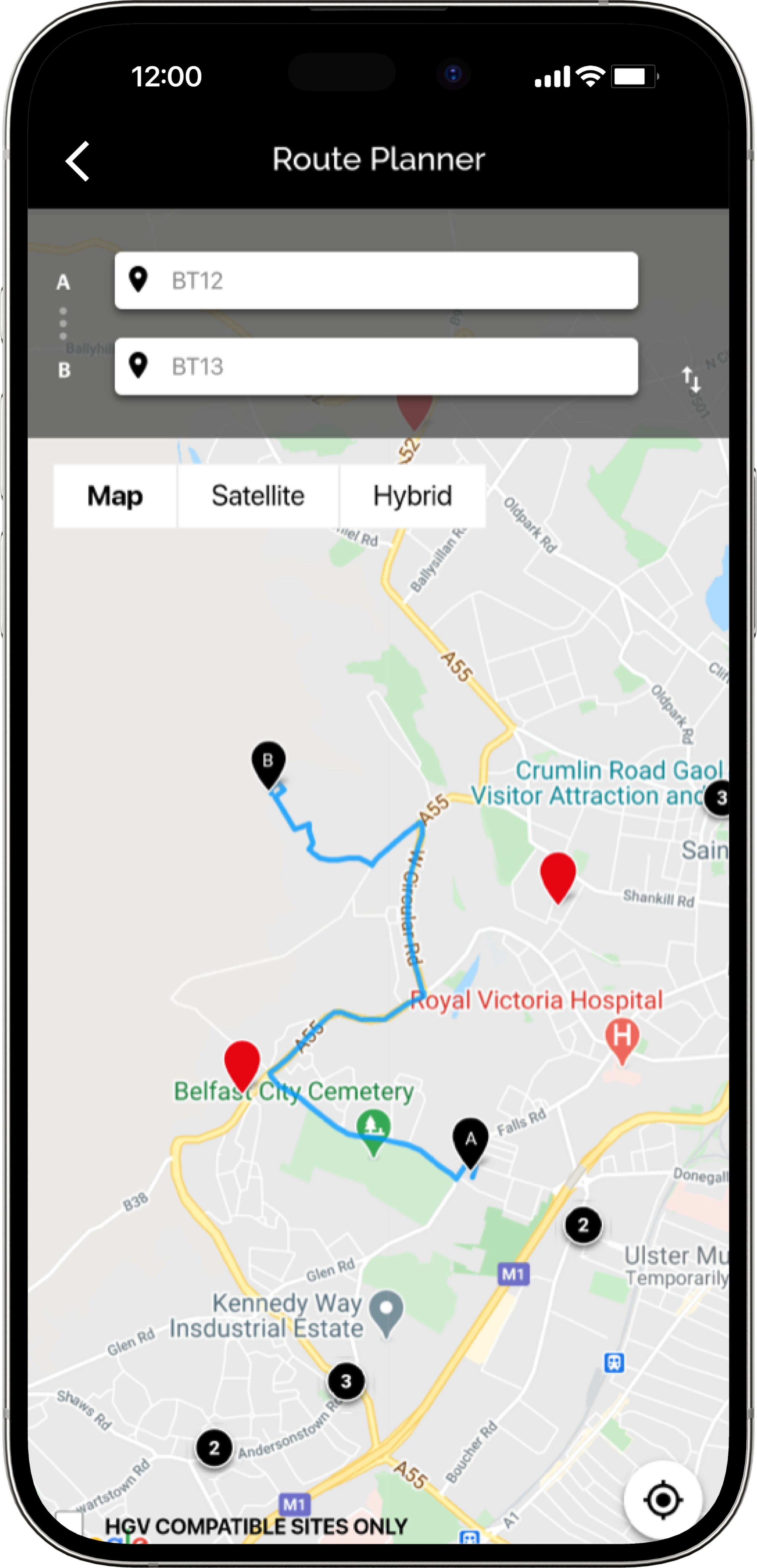
02. Route Planner.
Plot a journey between multiple points and every CSC Fuels location along the way is mapped. This is the feature that matters to anyone planning a run rather than reacting to a low tank.
-
03. Contact Us.
Direct dial to CSC Fuels in one tap, because the fastest resolution to an unusual problem is still a phone call.
-
04. Direct integration with the website.
Station information is maintained in one place, on the website, and the app reads from it. There is no duplicate data entry and therefore nothing to fall out of step. When the network changes, the app changes.
-
05. No login.
A deliberate decision rather than an omission. There was nothing the app needed to know about the user in order to be useful, and an account screen between a driver and a map is a reason to close the app.
-
06. One codebase across iOS and Android.
The job didn't warrant maintaining two native builds, and the money saved went into the integration that actually determines whether the app stays correct.

“The team at Scaffold Digital were quick to grasp what we had in mind and even suggested features to enhance the app which we hadn’t thought of. I was delighted with the end result and the professionalism of the work and support was outstanding.”
Craig Anderson / Managing Director
WHAT CHANGED
01.
The app launched on both the iOS and Android stores, replacing the one customers had stopped being able to rely on.
02.
Station information is maintained once, on the website, and the app reflects it automatically. The duplicate data entry is gone, and so is the drift it caused.
03.
Drivers can find their nearest site or plan a full route without creating an account or signing in.
04.
Managing the app stopped being a recurring job for the CSC Fuels team.
WHY IT WORKED
The easy version of this project would have been a better-looking version of the app they already had. It would have solved the complaint people were making: “The app feels old” without touching the reason the app had failed.
The first app didn't fail because of how it looked. It failed because its accuracy depended on someone doing manual work, indefinitely, with no reward for doing it and no immediate consequence for skipping it. Rebuild only the interface and you get an app that looks current on launch day and goes stale on precisely the same schedule as the last one.
So the part of this project that mattered was the least visible part of it: The integration that makes the website the single place station information is ever entered. Everything a customer sees follows from that. It's why the app was still right the week, the month after launch, and why it stays right without anyone having to think about it.
-

Discovery & Strategy
-

Software Development
-

Cloud Infrastructure
-

Support